 |
|
 |
|
|||||||||||||||
|











|
|
|
 |
||
|
Follow Mark on Facebook for more stories |
||
|
|
|
|
|
|
 |
|||||
|
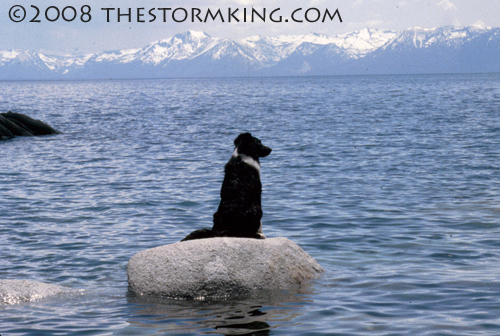
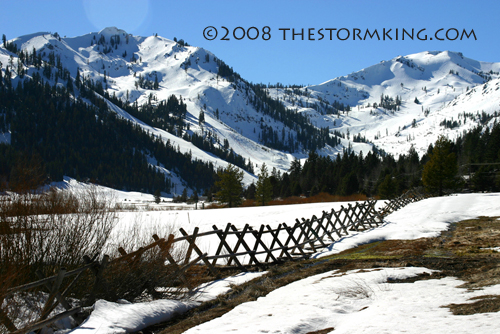
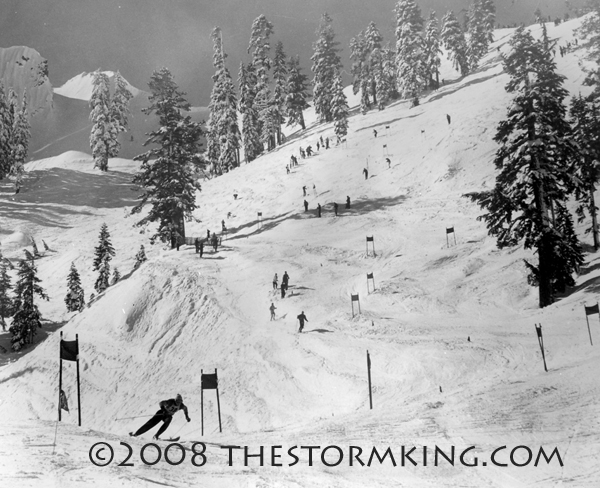
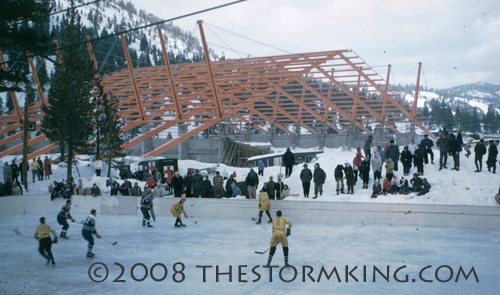
Tahoe Nugget #158 Snowstorm Saved Squaw in 1959 Good news for Tahoe skiers and snowboarders. A significant pattern change is on the way with a well-advertised cold front expected to blast through the area this weekend. Temperatures will be plummeting by 30 degrees leading to highs hovering in the upper teens to low 20s for several days after the frontal passage. Temps in the higher elevations above 7,000 feet are expected to be even colder. The passage of the front itself should be primarily a wind event since it's a fast moving system with an overland trajectory from the north that will keep it moisture starved. The frigid temps behind the front, however, may trigger lake effect snowfall near South Lake Tahoe. More importantly, forecasters are tracking a deep low pressure system that is expected to slowly work its way down the Pacific Coast from Sunday through Tuesday, pumping moisture into the region. Mountain temperatures will be so cold that water to snow ratios should be very high, meaning that each inch of rain will convert to 20 to 30 inches of snow. That's Utah powder folks. Just two inches of water (precipitation) from this system could easily translate into 5 feet of snow by Wednesday in the favored locations. Cold temperatures early next week will drive down snow levels to sea level in Northern California and to possibly around 500 feet near Sacramento. Locations in western Nevada like Reno and Carson City should also see snowfall. The productivity of this winter storm will be predicated on its exact track down the coast, but if the forecast verifies Tahoe skiers will be soon be whooping it up on the slopes. Tahoe winters have been slow out of the gate the past few years, but these late starts don't necessarily mean that the winter will be dry or that the skiing won't be good. You just have to have a little patience. Fifty years ago, the slow starting winter of 1959 had everyone worried too. High pressure dominated through December 1958 and it wasn't until early 1959 that the first major storm of the season pounded the Sierra with heavy snow. It wasn't just locals who were concerned about the lack of snow that year. The national media was focused on the North American Championships that were scheduled at Squaw Valley that February. The competition was actually international in scope and the event was a practice run for the Winter Olympic Games to be held at Squaw the following year. By mid-February 1959, hordes of American and international athletes were invading the little known ski area. The best skiers and skaters in the world were anxious to tackle the steep challenging ski runs, the towering 80-meter jump, and new outdoor ice rinks that construction crews had built. The Olympic skating rink was the world's first artificially frozen speed skating oval. Vying for berths on the U.S. Olympic team, American alpine athletes like Dick Dorworth and Buddy Werner were ready to prove their speed and talent against the stiff foreign competition. Because of the lack of snow earlier that winter there were serious concerns about sufficient snow depth on the racecourse runs. Luckily a major storm roared out of the Pacific on Feb. 11 and for two days heavy snow pounded the Sierra. Squaw Valley picked up 65 inches at the base lodge. On Feb. 13 warmer temperatures raised snow levels above 7,000 feet and soaked the snowpack with more than two inches of rain, but a few days later freezing levels dropped again and the snow really began piling up on KT22, site of the popular men's and women's downhill ski events. Extreme avalanche danger canceled all practice runs on KT22's upper slopes and forced frustrated racers back into the lodge. Farther to the north, snowfall tallies reached the extreme. At the Mount Shasta Ski Bowl, 7,841 feet in elevation, 178 inches fell in just six days, setting the Sierra's record single storm total of nearly 15 feet. A total of 236 inches of snow fell at Mt. Shasta in February 1959 (nearly 20 feet), a California record for the month. February's stormy pattern finally broke one day before the North American Championship's opening festivities. Squaw Valley had picked up 104 inches of snow in 10 days but that didn't stop thousands of spectators from flooding the former cow pasture. Competitors short of practice and patience quickly rebounded to thrill the crowds and Squaw Valley was on its way to world-class status. Photo #1: My dog Elko waiting for snow in the 1980s.
|
|||||
|
||||||||
|
