 |
|
 |
|
|||||||||||||||
|











|
|
|
 |
||
|
Follow Mark on Facebook for more stories |
||
|
|
|
|
 |
|||
|
|
|
|
|
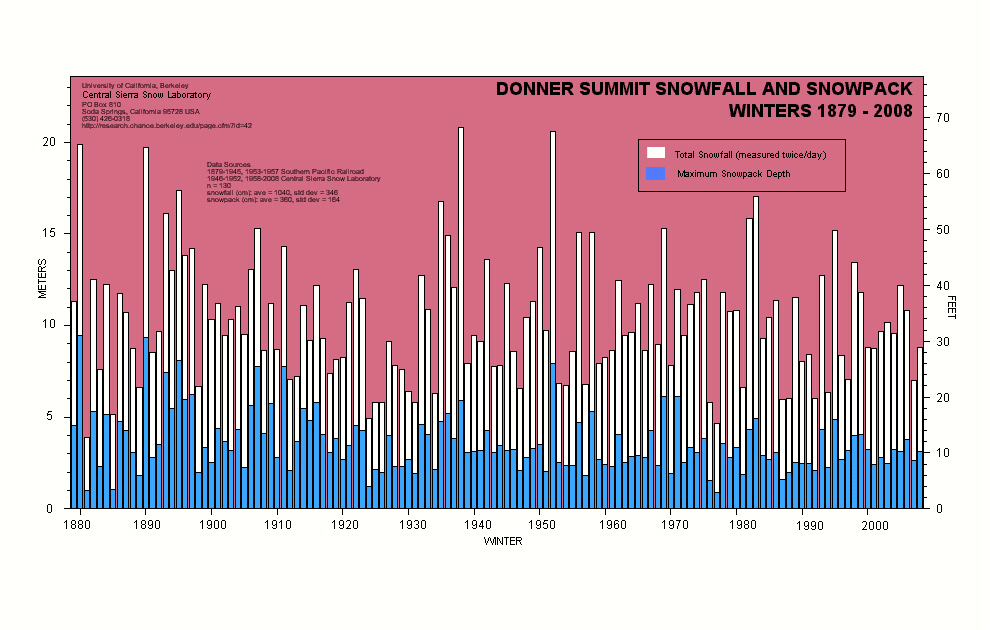
Tahoe Nugget #163: Winter 1952 Remembered With very little fanfare and no storm warnings, over the past few days Lake Tahoe resorts have been blessed with up to a three feet of fresh snow. It's just what the doctor ordered. After three weeks of sunny days and above average temperatures, what will probably go down as one of the driest Januaries ever is ending with a muted bang. Beginning on January 22, moisture from the subtropics brought mostly rain to lake level communities, but fortunately the higher elevations at the ski resorts picked up much needed snow. Skiers and snowboarders always prefer snow, but from a hydrologic perspective the rain was just as good for the parched watersheds. A cold storm from the Gulf of Alaska is surging into the Great Basin today, bringing much colder temperatures to the region. Snowfall is forecast through tonight which will top off the enhanced snowpack with super light powder. After this system swings east, a ridge of high pressure is expected to bring fair weather for the rest of January so skiing conditions this week should be the best since the New Year. It's been 57 years since the epic storms of January 1952, one of Tahoe's benchmark winters, buried the region in deep snow. But in times of need, it helps to traverse down memory lane to remember what winter can be like in the High Sierra. Last October I was interviewed about the 1952 winter by RSNTV Tahoe, a national television network that specializes in creating and distributing outdoor content to America's premier resorts. This is the first of several different interviews about weather and ski history we have done that are scheduled for broadcast on resort television networks and Tahoe-Truckee community access public television. Click here for the YouTube link: Photo #1: Chart indicates how much snow fell in 1952 compared to more recent winters. |
|||
 |
|||
|
|
 |
|
||||||||
|
